Ejina Poplar Forest: A Golden Oasis in the Desert – Witnessing Autumn's Fiery Spectacle
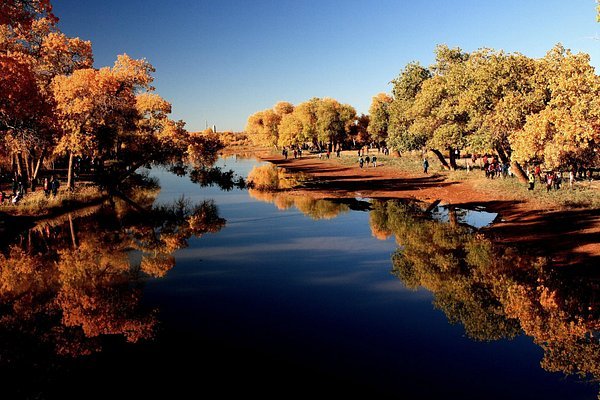
Imagine a vast desert stretching endlessly under an immense sky, then suddenly, you encounter an explosion of vibrant gold. Ancient trees, some reaching towering heights, their leaves a brilliant, fiery yellow, stand defiantly against the arid landscape, reflecting in shimmering desert lakes. This is the Ejina Poplar Forest (额济纳胡杨林 - Éjìnà Húyánglín) in Inner Mongolia, China, a place of unparalleled natural beauty and a truly breathtaking spectacle, especially during its brief, glorious autumn season. More than just a forest, Ejina is a resilient ecosystem, a historical crossroads, and a photographer's paradise, offering an unforgettable encounter with nature's raw power and ephemeral beauty.
This comprehensive guide will transport you through the mesmerizing world of Ejina – from its ancient, tenacious poplar trees and unique desert landscapes to its historical significance as a former military outpost and a crucial stop on the Silk Road, and the immersive experiences it offers. We'll also show you how Golden Trail Travel can unlock an unforgettable and seamlessly organized adventure, ensuring you discover the true essence and hidden treasures of this remarkable golden oasis. Prepare to be awed by its grandeur, moved by its resilience, and inspired by its fiery beauty.
Ejina: Where Desert Meets Gold – Geography, History, and Enduring Identity
To truly appreciate the Ejina Poplar Forest today, it's essential to understand its unique geographical setting and the compelling historical narrative that has shaped its existence and enduring identity.
A Desert Oasis: Location and Landscape:
Ejina Banner (a banner is an administrative division in Inner Mongolia, similar to a county) is located in the westernmost part of the Inner Mongolia Autonomous Region, bordering Gansu Province to the west and the Gobi Desert to the north. Its unique existence as a vibrant forest in such an arid region is thanks to the Ruo Shui River (弱水河), an inland river that flows from the Qilian Mountains, providing crucial water for the poplar trees.
-
Desert Environment: Ejina is surrounded by vast desert landscapes, including parts of the Badain Jaran Desert (巴丹吉林沙漠), known for its towering mega-dunes and numerous interdune lakes. This stark contrast between the golden trees and the desolate desert creates its famous visual drama.
-
Poplar Species: The dominant tree species is the Euphrates Poplar (Populus euphratica - 胡杨), often called the "desert poplar" or "living fossil tree." These trees are incredibly resilient, adapted to thrive in harsh desert conditions, tolerating both drought and salinity. They are renowned for their incredible longevity, with some trees living for hundreds or even a thousand years.
-
Autumn Spectacle: The most famous time to visit is during autumn (typically late September to mid-October) when the poplar leaves turn a brilliant golden yellow, creating a fiery spectacle against the blue sky and sand. This brief period draws visitors from across China and the world.
A Historical Crossroads: From Silk Road Outpost to Military Stronghold (Ancient Times - Present):
Ejina's history is deeply intertwined with its strategic location and the vital water source provided by the Ruo Shui River.
-
Juyan Lake Culture (居延海 - Jūyánhǎi): For centuries, the Ejina region, particularly around Juyan Lake, was a crucial oasis and strategic point on the ancient Silk Road. Historical records indicate a thriving settlement and military garrisons here dating back to the Han Dynasty (206 BC – 220 AD). Numerous Han Dynasty bamboo slips (Juyan Han Bamboo Slips) have been unearthed, providing invaluable insights into frontier life, military administration, and trade routes.
-
Former Military Outpost: Throughout various dynasties, Ejina (then often referred to by its historical names like Juyan) served as a vital frontier outpost, protecting the western borders of the Chinese empire against nomadic incursions. Its location also made it a critical supply point for expeditions further west.
-
Heishui City (黑城 - Hēichéng) / Khara-Khoto: The Black City: A famous Tangut (Western Xia Dynasty) city, located within the Ejina Banner, which flourished as a major trade center on the Silk Road until it was besieged and abandoned in the 14th century. Its haunting ruins in the desert are a testament to Ejina's historical significance.
-
Modern Significance: Today, Ejina continues to be strategically important. It is home to the Jiuquan Satellite Launch Center (酒泉卫星发射中心), China's first and largest satellite launch center, located nearby. While not directly accessible to tourists, its presence underscores the region's continued strategic value.
-
Environmental Challenges: The Ejina Poplar Forest faces ongoing environmental challenges, primarily water scarcity due to upstream diversion of the Ruo Shui River. Significant efforts have been made in recent decades to ensure water flow to protect this fragile ecosystem.
A Symbol of Resilience and Beauty:
The Ejina Poplar Forest has come to symbolize resilience and tenacity in the face of adversity. The Euphrates Poplar is legendary for its ability to "live for a thousand years without dying, stand for a thousand years after dying, and remain for a thousand years after falling." This enduring spirit, combined with its dramatic autumn colors, has made Ejina a place of profound beauty and inspiration.
The Golden Spectacle: Unforgettable Landscapes, Historical Ruins, and Desert Adventures
Ejina offers a truly unique travel experience, centered around its natural beauty, particularly during autumn, and its haunting historical sites.
The Ejina Poplar Forest Scenic Area (额济纳胡杨林旅游区): Autumn's Masterpiece:
This is the main draw, a vast area dedicated to showcasing the poplar trees. The scenic area is divided into several sections (often numbered from Section 1 to Section 8), each offering a slightly different perspective on the forest and its surrounding landscape.
-
Section 1 & 2: Often feature more sparse, isolated trees, good for dramatic photos with vast skies.
-
Section 4 (英雄林 - Yīngxiónglín - Hero Forest): One of the most popular sections, characterized by dense clusters of towering poplars, their golden leaves forming a vibrant canopy. It's particularly famous for its photogenic qualities and often features in films and documentaries.
-
Section 7 (二道桥 - Èrdàoqiáo - Second Bridge): Another highly photogenic section with a small river flowing through the golden poplars, creating stunning reflections and a classic "water-reflection" shot. This area is particularly popular for sunset photography.
-
Section 8 (八道桥 - Bādàoqiáo - Eighth Bridge) / Badain Jaran Desert Connection: This section offers direct access to the edge of the Badain Jaran Desert, where the golden poplars meet the rolling sand dunes. It's an excellent spot for camel riding, desert photography, and watching the sunset over the dunes and poplars.
-
Photography Paradise: The contrast of the golden leaves against the blue sky and yellow sand creates unparalleled photographic opportunities. Early mornings and late afternoons offer the best light.
-
Best Time to Visit: The golden leaves typically appear from late September to mid-October, with the peak period usually around the first or second week of October. This timing can vary slightly each year depending on temperature and rainfall. It's crucial to check local forecasts for the "peak golden period."
Heishui City (黑城 - Hēichéng) / Khara-Khoto: The Black City Ghost Town:
Located about 25 km southeast of the Ejina Poplar Forest Scenic Area, the ruins of Heishui City are a haunting and historically significant site in the middle of the desert.
-
Ancient Silk Road City: This was a major Tangut city (Western Xia Dynasty) that flourished as a trade hub from the 11th to the 14th centuries. It was a crucial waypoint on the Silk Road.
-
Marco Polo's Visit: It's believed that Marco Polo visited Khara-Khoto during his travels.
-
Deserted Ruins: The city was besieged and eventually abandoned in the 14th century, leaving behind remarkably well-preserved mud-brick walls, stupas, and scattered pottery shards.
-
Atmospheric and Mysterious: The desolate ruins, especially at sunrise or sunset, evoke a powerful sense of history and mystery. It's a reminder of the fragility of civilizations in harsh environments.
-
Exploration: Visitors can walk among the ruins, imagining the bustling city it once was. Due to its historical importance, it's a key site for archaeologists and historians.
Juyan Lake (居延海 - Jūyánhǎi): A Vital Historical Lifeline:
Located north of Ejina Banner, Juyan Lake is a group of lakes (East and West Juyan Lake) that have historically been vital for the region's existence, fed by the Ruo Shui River.
-
Historical Significance: This area was the heart of the ancient Juyan Han Dynasty frontier settlements. Numerous bamboo slips and other artifacts have been discovered here, shedding light on Han Dynasty frontier life.
-
Ecological Recovery: After periods of severe drought, efforts have been made to restore water flow to Juyan Lake, leading to a revitalization of its ecosystem.
-
Birdwatching: The lake is now a stopover for migratory birds, especially in spring and autumn, making it a good spot for birdwatching.
-
Sunrise Views: East Juyan Lake is popular for sunrise views, with the sun rising over the water and surrounding reeds.
Badain Jaran Desert (巴丹吉林沙漠 - Bādānjílín Shāmò): Majestic Sand Dunes:
While the Ejina Poplar Forest is on the edge of the Badain Jaran, venturing deeper into this desert offers a unique and breathtaking experience.
-
Mega-Dunes and Lakes: This desert is famous for having some of the tallest stationary dunes in the world (some over 500 meters high) and hundreds of permanent interdune lakes, an astonishing ecological phenomenon.
-
Desert Photography: The patterns of light and shadow on the massive dunes create incredible photographic opportunities.
-
Camel Treks and Off-Roading: Experience the desert on camelback or take thrilling off-road tours in 4x4 vehicles.
Other Activities and Experiences:
-
Grave of the Living Buddha (活佛墓 - Huófó Mù): A small, tranquil site, the tomb of a Living Buddha, offering a glimpse into local Buddhist practices.
-
Local Culture: While the focus is heavily on the natural spectacle, engage with local Mongolian culture in Ejina town, particularly its cuisine and handicrafts.
The Hearty and Resourceful Cuisine of Ejina: Flavors of the Desert Frontier
Ejina's cuisine is a practical reflection of its desert environment and its position at the crossroads of different cultures. It's hearty, often meat-based (especially lamb), and incorporates influences from Mongolian, Han Chinese, and even some Central Asian flavors, making use of available resources.
-
Ejina Lamb (额济纳羊肉 - Éjìnà Yángròu): Lamb is king here, known for its tenderness and lack of gaminess due to the specific grazing conditions in the area.
-
Hand-Pulled Mutton (手把肉 - Shǒubǎ Ròu): Lamb boiled with minimal seasoning, served in large chunks for diners to cut themselves, often with a dipping sauce. A classic and authentic Mongolian staple.
-
Roasted Lamb Skewers (烤羊肉串 - Kǎo Yángròuchuàn): Popular street food, marinated lamb grilled on skewers.
-
Lamb Hot Pot (羊肉火锅 - Yángròu Huǒguō): Thinly sliced lamb cooked in a simmering broth with various vegetables.
-
"Mongolian Milk Tea" (奶茶 - Nǎichá): A staple beverage, often savory, made with brick tea, fresh milk (cow or goat), and sometimes salt. Warming and nourishing.
-
Dairy Products (奶制品 - Nǎizhìpǐn): Similar to Hohhot, various milk products are common:
-
Wheat-Based Staples: Given the availability of water from the Ruo Shui, wheat is also a common crop.
-
Noodles (面条 - Miàntiáo): Various types of noodles, often served with lamb-based sauces or in soups.
-
Steamed Buns (馒头 - Mántou) and Bread: Hearty breads and steamed buns are common.
-
Camel Meat (骆驼肉 - Luòtuo Ròu): Less common for daily consumption, but sometimes available as a specialty, especially in restaurants catering to tourists. Often braised or stewed.
-
Desert Wild Vegetables/Herbs: Occasionally, foraged desert herbs or vegetables might be incorporated into dishes.
-
Culinary Experience: Dining in Ejina is generally simple and hearty, focusing on fresh, local ingredients. Golden Trail Travel can help you find authentic local eateries that showcase these regional flavors.
Unlocking Your Ejina Golden Adventure with Golden Trail Travel
Venturing into a remote desert region like Ejina, particularly during its peak season, requires meticulous planning and expert local knowledge. This is where Golden Trail Travel becomes your invaluable partner, transforming your trip into a seamlessly planned, deeply insightful, and profoundly enriching adventure.
Specialized Autumn Poplar Forest & Desert Tours:
Golden Trail Travel excels in designing bespoke tours that fully capture the unique essence of Ejina, catering to your specific interests, whether they are focused purely on the golden poplars, historical exploration, or desert adventures.
-
Peak Season Expertise: Golden Trail Travel has extensive experience navigating the complexities of Ejina during its peak autumn season. They can advise on the ideal travel dates for optimal foliage, manage crowds, and ensure you have the best possible viewing and photography opportunities.
-
Tailored Itineraries: From prioritizing visits to specific sections of the Poplar Forest for photography (e.g., sunrise/sunset at Section 7/8) to arranging excursions to Heishui City, Juyan Lake, or even deeper into the Badain Jaran Desert, Golden Trail Travel can customize a tour that perfectly aligns with your passions and pace.
-
Beyond the Gold: They connect you with the profound historical significance of Ejina as a Silk Road outpost, offering opportunities to understand the ancient cultures that thrived in this challenging environment.
Visit Golden Trail Travel's website at https://goldentrailtravel.com/ to explore their diverse range of tours and begin crafting your own Ejina golden adventure.
Knowledgeable Local Guides:
A key component of a Golden Trail Travel experience in Ejina is access to their network of expert local guides. These guides are fluent in English and possess a profound understanding of Ejina's unique ecosystem, its rich Silk Road history, the best photographic spots, and the nuances of the local culture and environment.
-
Navigating the Scenic Area: Your guide will know the optimal times to visit different sections of the Poplar Forest, helping you avoid the largest crowds and find the best light for photography.
-
Historical Context: They will bring the stories of Heishui City and Juyan Lake to life, explaining their historical significance and the archaeological discoveries made there.
-
Logistical Efficiency: They are indispensable for navigating the sometimes challenging logistics of a remote area, from arranging desert transportation (e.g., 4x4s for Badain Jaran) to finding authentic local eateries.
Seamless Logistics and Comfort:
Traveling to a remote, popular seasonal destination like Ejina requires meticulous planning. Golden Trail Travel ensures your comfort and peace of mind throughout your journey:
-
Transportation: Arranging all ground transportation to and within Ejina Banner. This often involves flights to nearby airports (like Jiayuguan or Jinchang in Gansu, or even Hohhot or Lanzhou with connecting flights/trains/buses), followed by private vehicle transfers to Ejina, and efficient transport within the scenic area itself. They ensure you navigate the vast desert landscapes efficiently and safely.
-
Accommodation: Securing the best available accommodations in Ejina Banner, which can be limited and highly sought after during peak season. Golden Trail Travel leverages its network to ensure comfortable stays despite the seasonal demand.
-
Trouble-free Travel: Handling any potential language barriers or logistical hurdles, such as purchasing tickets, arranging special activities (like desert treks or jeep tours), or managing the large influx of tourists during peak season, allowing you to relax and fully immerse yourself in the experience. They can also advise on appropriate clothing and gear for desert conditions.
Combination Tours: Exploring Gansu and Western China:
Ejina is ideally positioned to be integrated into a broader exploration of China's fascinating Western regions, particularly the Hexi Corridor in Gansu Province. Golden Trail Travel can seamlessly combine your visit to Ejina with trips to:
-
Dunhuang: Home to the Mogao Grottoes (a UNESCO World Heritage site and a treasure trove of Buddhist art) and the stunning Mingsha Sand Dunes.
-
Jiayuguan: The westernmost end of the Great Wall, with an impressive fortress.
-
Zhangye: Famous for its vibrant Danxia landforms (Rainbow Mountains) and Pingshanhu Grand Canyon.
-
Xining/Qinghai Lake: Gateway to the Tibetan Plateau and a major center for Tibetan Buddhism.
Golden Trail Travel's expertise extends across these remote and culturally rich regions, allowing for efficient, insightful, and complementary multi-city itineraries that truly showcase the diverse landscapes and heritage of Western China.
Commitment to Responsible Tourism:
Golden Trail Travel is dedicated to promoting responsible and sustainable tourism practices. They strive to ensure that your visit to Ejina benefits local communities, respects the fragile desert ecosystem and its ancient heritage sites, and minimizes environmental impact, leaving a positive footprint on this unique golden oasis. They encourage responsible photography and preservation of historical ruins.
The Enduring Allure of Ejina: Why This Golden Oasis Beckons
Ejina's magnetic appeal lies in its breathtaking natural spectacle, its profound historical resonance, and the sheer uniqueness of experiencing such vibrant life in the heart of a vast desert.
An Unparalleled Autumn Spectacle:
The sight of the golden poplar forest against the desert backdrop is simply unforgettable, a powerful and ephemeral display of nature's artistry that draws photographers and nature lovers from around the globe.
A Glimpse into the Silk Road:
Exploring the haunting ruins of Heishui City and the historical significance of Juyan Lake offers a tangible connection to the ancient Silk Road, understanding the challenges and triumphs of ancient trade and frontier life.
The Resilience of Nature:
The Euphrates Poplar trees themselves are a testament to resilience, thriving in one of the world's harshest environments, inspiring admiration for their tenacity.
Dramatic Desert Landscapes:
The proximity to the Badain Jaran Desert provides an opportunity to experience monumental sand dunes and unique desert phenomena, offering a stark yet beautiful contrast to the golden forest.
Photographer's Paradise:
With its incredible colors, dramatic light, and unique subjects, Ejina offers endless opportunities for stunning photography, from wide landscapes to intimate details.
A Sense of Discovery:
As a less-traveled destination (outside of its peak season), Ejina offers a profound sense of adventure and discovery, providing a truly unique and memorable experience away from the mainstream.
Frequently Asked Questions (FAQ) about Ejina Poplar Forest and Golden Trail Travel
Q1: Where is Ejina Poplar Forest located in China? A1: The Ejina Poplar Forest (额济纳胡杨林) is located in Ejina Banner, Inner Mongolia Autonomous Region, China, in the westernmost part of Inner Mongolia, bordering Gansu Province.
Q2: What is Ejina most famous for? A2: Ejina is most famous for its stunning golden Poplar Forest (Euphrates Poplar), which turns a vibrant yellow in autumn, creating an incredible desert oasis spectacle. It's also known for historical sites like Heishui City (Khara-Khoto), an ancient Silk Road ghost town, and its proximity to the Badain Jaran Desert.
Q3: When is the best time to visit Ejina Poplar Forest? A3: The absolute best time to visit Ejina is during autumn, typically from late September to mid-October, when the poplar leaves turn golden. The peak period is usually around the first or second week of October, but it can vary slightly each year based on weather conditions.
Q4: How do I travel to Ejina? A4: Traveling to Ejina usually involves flying to a nearby airport like Jiayuguan (JGN) or Jinchang (JIC) in Gansu Province, or even Hohhot (HET) or Lanzhou (LHW), followed by a combination of train/bus and private vehicle transfers to Ejina Banner. During peak season, there might be direct trains from Hohhot. Golden Trail Travel can arrange all complex transportation for you.
Q5: What can I do at the Ejina Poplar Forest Scenic Area? A5: You can explore different sections of the forest, each offering unique views and photography opportunities (e.g., Hero Forest, Second Bridge for reflections). Many visitors enjoy camel riding or jeep tours at Eighth Bridge, which leads into the Badain Jaran Desert.
Q6: What is Heishui City (Khara-Khoto)? A6: Heishui City (黑城), also known as Khara-Khoto, is the atmospheric ruin of an ancient Tangut Silk Road city located in the Ejina desert. It was abandoned in the 14th century and offers a fascinating glimpse into historical frontier life.
Q7: What kind of food can I expect in Ejina? A7: Ejina cuisine is hearty and often meat-based, with a strong emphasis on lamb. You can expect dishes like Hand-Pulled Mutton (手把肉), Roasted Lamb Skewers (烤羊肉串), and Mongolian Milk Tea (奶茶). Wheat-based staples are also common.
Q8: How can Golden Trail Travel enhance my Ejina trip? A8: Golden Trail Travel specializes in tailored autumn poplar forest and desert tours to Ejina. They leverage their peak season expertise to secure accommodation and manage logistics, provide expert local guides who offer deep cultural and historical insights, handle all transportation, and ensure a seamless, authentic, and unforgettable golden adventure.
Q9: Can Golden Trail Travel combine Ejina with other destinations? A9: Yes! Golden Trail Travel can seamlessly integrate your visit to Ejina with other spectacular destinations in Western China, such as the Mogao Grottoes in Dunhuang, the Jiayuguan Pass of the Great Wall, or the Danxia landforms in Zhangye, creating a comprehensive and diverse itinerary through this fascinating region.
Customer Reviews: My Unforgettable Golden Adventure in Ejina with Golden Trail Travel
"Our trip to Ejina with Golden Trail Travel was beyond breathtaking! The golden poplar forest was even more magnificent than I imagined, especially at sunrise and sunset. Our guide was a fantastic photographer and knew all the best spots, ensuring we captured incredible memories. Golden Trail Travel handled all the complex logistics of traveling to such a remote area, making it an absolutely seamless and magical experience." — Eleanor R., USA
"I've always wanted to see the Ejina Poplar Forest in autumn, and Golden Trail Travel made it a reality. The highlight for me was exploring the haunting ruins of Heishui City – it felt like stepping back in time on the Silk Road. Our guide's knowledge of the history and local culture was exceptional. Every detail, from comfortable transport to finding the best views, was perfectly managed." — Marcus L., UK
"As a professional photographer, Ejina was a dream come true, and Golden Trail Travel was invaluable. They understood my needs for specific lighting and locations, ensuring we were always at the right place at the right time. The reflections in Section 7 were stunning! Plus, trying the local lamb dishes was a delicious bonus. Highly recommend Golden Trail Travel for any serious photographer heading to Ejina." — Sophia M., Germany
"This trip was an incredible blend of natural beauty and profound history. The resilience of the poplar trees against the desert backdrop was so inspiring. Golden Trail Travel's guide provided such rich historical context for Heishui City and Juyan Lake, making the ruins truly come alive. Their meticulous planning for a peak-season trip ensured we had a comfortable and immersive experience without any hitches." — Professor Charles D., Australia
"Golden Trail Travel created an amazing Western China itinerary for us that included Ejina, Dunhuang, and Zhangye. Ejina's golden poplars were an absolute highlight. The entire trip was incredibly well-organized, safe, and authentic. Their team was so responsive and helpful throughout. If you're planning a trip to this unique part of China, Golden Trail Travel is the way to go!" — Li Wei, Singapore
Conclusion: Ejina Awaits – Your Journey into a Golden Desert Dream
The Ejina Poplar Forest stands as a stunning testament to nature's enduring power and the fleeting beauty of autumn. It's a place where the stark vastness of the desert is miraculously transformed into an explosion of golden light, where ancient trees tell stories of millennia, and where the haunting ruins of a Silk Road city whisper tales of bygone eras. For those seeking an extraordinary encounter with unique natural beauty, a deep dive into ancient history, and an unforgettable photographic journey, Ejina offers an experience that is profoundly authentic, visually breathtaking, and deeply captivating. It is a destination that beckons to the adventurous spirit, the history enthusiast, and the lover of dramatic landscapes alike.
To truly unlock the multifaceted wonders and ephemeral magic of this extraordinary golden oasis, an experienced and dedicated partner is indispensable. Golden Trail Travel is your trusted guide to Ejina, offering meticulously planned tours, expert local insights, and a steadfast commitment to authentic encounters, especially during its spectacular peak season. Let them lead you through the golden trails and historical echoes of Ejina, where the desert blooms with fire, and your next unforgettable adventure awaits






.jpg "Northeast Vietnam Cycling: Discover Vietnam’s Most Underrated Biking Adventure")

.webp "Ethnic Minority Villages in Hoàng Su Phi: Where Rice Terraces Meet Living Culture")
.jpg "12-Day Northern Vietnam Cycling Tour: Mu Cang Chai, Ha Giang & Hoang Su Phi Bike Adventure")