Sakya: The Ancient Capital of a Lost Empire – Unveiling Tibet's Scholarly and Political Heart
Imagine stepping back in time to an era when powerful monasteries governed vast lands, their abbots wielding influence that spanned empires. Picture a fortress-like monastic complex, its walls painted with distinctive stripes of red, white, and grey, housing an unparalleled treasure trove of ancient scriptures, sacred art, and a legacy that shaped the very destiny of Tibet. This is Sakya Monastery (Sakyapa), the spiritual and historical heart of the Sakya school of Tibetan Buddhism, and once the de facto capital of Tibet during the Yuan Dynasty (13th-14th centuries). Located in the remote Shigatse region, Sakya is not just a monastery; it's a living museum, a formidable fortress, and a profound testament to a powerful monastic empire that blended spiritual authority with political might. For those who seek to unravel the intricate tapestry of Tibet's past, understand its diverse Buddhist traditions, and witness unparalleled cultural relics, a journey to Sakya is an essential and deeply enriching experience, far removed from the more commonly trodden paths.
Sakya's Enduring Legacy: Where Spirituality Met Imperial Power
Sakya's unique place in Tibetan history is defined by its rise to prominence not just as a religious center, but as a political powerhouse that governed Tibet for over a century.
The Sakya School: A Distinctive Tradition
The Sakya school is one of the four main schools of Tibetan Buddhism (alongside Nyingma, Kagyu, and Gelug). Founded in 1073 by Khön Könchok Gyelpo, it is distinguished by:
-
Hereditary Lineage: The leadership of the Sakya school is primarily hereditary, passed down through the Khön family.
-
"Path and Result" (Lamdre) Teachings: Its core teachings focus on a complex system called Lamdre, emphasizing the inseparability of the path to enlightenment and the enlightened result.
-
Scholarly Rigor: The Sakyapas are renowned for their profound scholarship, logical debate, and extensive preservation of Buddhist texts.
The monastery's distinctive architecture, with its striped walls (representing Manjushri, Avalokiteshvara, and Vajrapani – wisdom, compassion, and power), makes it instantly recognizable and symbolizes its unique identity.
The Sakya Dynasty: Governing Tibet for the Mongols
The pivotal moment in Sakya's history came in the 13th century when Sakya Pandita (1182–1251), the fourth Sakya Trizin (throne holder), formed a crucial relationship with Godan Khan, a grandson of Genghis Khan. Later, Sakya Pandita's nephew, Chögyal Phagpa (1235–1280), established an even closer relationship with Kublai Khan, the founder of the Yuan Dynasty.
-
Priest-Patron Relationship: Phagpa developed the "priest-patron" relationship with Kublai Khan, where the Sakya lamas provided spiritual guidance to the Mongol emperors, and in return, the Mongols granted political authority over Tibet to the Sakya school.
-
De Facto Rulers of Tibet: For over a century (roughly 1260-1354), the Sakya Lhamo Phodrang (Palace) in Sakya became the de facto capital of Tibet, exercising political, religious, and administrative control over the entire region under Mongol patronage. This era was crucial for shaping Tibet's political structure and its relationship with China.
-
Cultural Exchange: This period also saw significant cultural exchange, with Tibetan Buddhism gaining influence in the Mongol court and Mongol patronage supporting the construction and expansion of monasteries like Sakya.
A Repository of Knowledge and Art: The Sakya Library
Beyond its political history, Sakya Monastery is globally significant for its unparalleled collection of Buddhist scriptures and ancient art.
-
The Great Library: Its "great library" is legendary, reportedly containing tens of thousands of volumes of sutras, tantras, and commentaries. Many of these are ancient manuscripts, some written in gold ink, spanning centuries of Buddhist scholarship. Some believe there are undiscovered texts still within its sealed walls.
-
Artistic Treasures: The monastery houses an extraordinary collection of murals, thangkas (religious scrolls), statues, and other artifacts, some dating back to the Yuan Dynasty, showcasing a unique blend of Tibetan, Chinese, and even Nepalese artistic influences from its heyday.
Sakya's legacy is thus a fascinating blend of profound scholarship, political pragmatism, and artistic brilliance, making it an indispensable stop for anyone truly wanting to understand Tibet's intricate past.
The Sakya Experience: Exploring a Fortress of Faith and Knowledge
Visiting Sakya is like stepping into a living historical document. The imposing architecture, the ancient treasures, and the palpable sense of history make it a truly immersive experience.
1. The Sakya Monastery Complex: A Tale of Two Sides
The Sakya complex is divided into two distinct parts, reflecting different periods of its history:
-
North Monastery (Northern Lhakhang): This older section, located on the northern hillside, was the original monastery founded in 1073. While much of it is in ruins today due to historical events and natural decay, its remnants offer a glimpse into the monastery's initial scale and strategic defensive position.
-
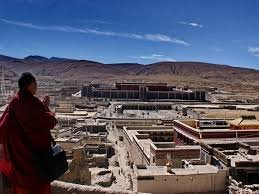
South Monastery (Southern Lhakhang): This is the main, active part of the monastery today, a massive, fortress-like structure built on the valley floor in 1268 by Sakya Phagpa. Its formidable walls, reaching up to 16 meters high, make it one of the largest and most impressive monastic complexes in Tibet. The three distinctive striped bands – grey, white, and red – are immediately striking, symbolizing Manjushri (wisdom), Avalokiteshvara (compassion), and Vajrapani (power), respectively.
2. The Main Assembly Hall (Lhakang Chempo): Heart of the South Monastery
The Lhakang Chempo is the most significant hall in the South Monastery and one of the most impressive monastic halls in Tibet.
-
Gigantic Pillars: It is supported by massive wooden pillars, including four colossal ones reportedly gifted by Kublai Khan. These pillars are so large they are believed to have been transported from distant forests with the help of elephants.
-
Ancient Murals: The walls are adorned with ancient murals, some dating back to the 13th and 14th centuries, depicting various deities, mandalas, and scenes from Buddhist mythology. Their historical and artistic value is immense.
-
Central Altar: The hall houses numerous ancient statues of Buddhas, bodhisattvas, and Sakya patriarchs, many of gilded bronze.
3. The Sakya Library (The Great Library): A Treasure Trove of Scriptures
This is arguably the most famous feature of Sakya Monastery.
-
Tens of Thousands of Texts: Housed within a massive 60-meter-long, 10-meter-high wall of shelves, this library is said to contain an astonishing collection of 84,000 ancient texts, including sutras, tantras, and commentaries. Many are handwritten manuscripts, some adorned with gold, silver, and precious stones.
-
Uncatalogued Wonders: It's believed that many texts remain uncatalogued and potentially undiscovered, protected within the sealed sections of the library.
-
Scholarly Significance: This collection represents an unparalleled repository of Buddhist knowledge, making Sakya a crucial center for Tibetan Buddhist scholarship throughout history. Access to the main library is often restricted, but guides can usually arrange a viewing of some sections.
4. Other Chapels and Halls
The South Monastery complex includes numerous other chapels, ritual halls, and residential quarters for monks, each with its own unique collection of sacred art, statues, and historical artifacts. Exploring these smaller halls reveals the intricate layers of Sakya's spiritual and artistic heritage.
5. Defensive Architecture: A Fortress of Faith
Beyond its religious function, Sakya's fortress-like design speaks volumes about its political and military past. The thick, high walls, watchtowers, and strategic placement reflect an era when monasteries needed to defend themselves and their vast holdings. This blend of spiritual sanctuary and formidable stronghold is unique to Sakya.
6. Local Sakya Town: A Quiet Reflection of History
The small town of Sakya around the monastery is a quiet place, primarily serving the monastic community and a small number of visitors. It offers a glimpse into local Tibetan life, often simpler and more traditional than in larger cities like Lhasa or Shigatse.
Sakya's Role in Tibetan Journeys: A Cultural Detour from the Main Road
While not directly on the main overland route to Mount Kailash, Sakya is a highly recommended and relatively accessible detour for travelers keen to explore Tibet's deeper cultural and historical narratives.
A Detour from Shigatse: Accessible Historical Insight
Sakya is located about 130-150 km southwest of Shigatse, making it a feasible day trip or an overnight stop from Tibet's second-largest city.
-
Road Conditions: The road to Sakya is generally in good condition, allowing for a comfortable journey by private vehicle.
-
From Everest Base Camp (EBC): Some itineraries traveling from EBC back towards Shigatse or Lhasa might incorporate a stop in Sakya, adding a rich historical layer to the journey through the Himalayas.
Breaking the Journey: Spiritual and Intellectual Enrichment
A visit to Sakya offers a break from the often long drives and provides a concentrated dose of Tibetan history, art, and intellectual tradition.
-
Contrast with Other Monasteries: Sakya offers a different perspective from other major monasteries like Tashilhunpo in Shigatse or those in Lhasa. Its political history and unique scholarly tradition provide crucial context for understanding Tibet's complex past.
-
Unparalleled Treasures: The sheer volume and age of the artifacts and scriptures housed in Sakya are unmatched in many other places, making it a pilgrimage for historians and art enthusiasts alike.
Essential Part of a Comprehensive Tibet Tour
For anyone truly wanting to delve beyond the surface of Tibet's popular attractions, incorporating Sakya into their itinerary is highly recommended. It provides a deeper understanding of the interplay between religion and politics that shaped Tibetan civilization.
Life in Sakya: High-Altitude Living and Cultural Immersion
Like much of Tibet, Sakya is at a high altitude and requires careful acclimatization. The local culture is deeply intertwined with the monastery.
Altitude and Acclimatization: Managing the Elevation
Sakya is situated at an elevation of approximately 4,300 meters (14,100 feet).
-
Higher than Lhasa: It's significantly higher than Lhasa (3,650m) but generally lower than EBC (5,200m) or the Dolma La Pass (5,630m) on the Kailash Kora.
-
Crucial Acclimatization: Travelers arriving from lower altitudes should have spent sufficient time acclimatizing in Lhasa and Shigatse. A day in Sakya before moving to even higher regions is beneficial.
-
Symptoms Awareness: Maintain vigilance for symptoms of Acute Mountain Sickness (AMS). Drink plenty of water, move slowly, and inform your guide of any discomfort.
Local Cuisine: Hearty Tibetan Fare
Food options in Sakya town are basic, primarily catering to pilgrims and locals.
-
Noodle Soups (Thukpa): A ubiquitous and comforting dish, often with yak meat or vegetables.
-
Tsampa (Roasted Barley Flour): The traditional Tibetan staple, often served with yak butter tea.
-
Momos (Dumplings): Steamed or fried dumplings with various fillings.
-
Yak Butter Tea: Essential for hydration and warmth in the high-altitude climate.
-
Sweet Tea: A popular, less traditional alternative.
These simple, hearty meals provide the energy needed for exploring the monastery and adapting to the altitude.
Cultural Etiquette and Respect
Visiting a place as sacred and historically significant as Sakya requires respectful conduct:
-
Dress Modestly: Cover shoulders and knees, especially when entering temples.
-
Remove Shoes: Take off your shoes before entering main prayer halls.
-
Circumambulation (Kora): If you walk around the monastery (often clockwise), do so respectfully.
-
Photography: Ask for permission before photographing monks or locals. Inside temples, photography is often restricted or requires a fee.
-
Offerings: Small monetary offerings (donations) at altars are appreciated.
Planning Your Sakya Expedition with Golden Trail Travel
A journey to Sakya Monastery, a hidden gem of Tibetan history and culture, requires careful planning and expert logistical support. Due to the permit requirements for foreigners in Tibet and the remote nature of the region, an organized tour with a licensed and experienced operator like Golden Trail Travel is absolutely essential.
Why Choose Golden Trail Travel for Your Sakya & Tibet Adventure?
-
Unmatched Permit Expertise: Golden Trail Travel specializes in navigating the complex and ever-changing permit system for Tibet. They expertly handle the Tibet Travel Permit (TTP) and any additional permits required for specific regions like Sakya, ensuring a smooth and worry-free entry into and travel within Tibet.
-
Tailored Cultural & Historical Immersion: Golden Trail Travel crafts itineraries that prioritize deep cultural and historical understanding. They recognize Sakya's unique significance and ensure your visit is guided by knowledgeable local experts who bring its ancient stories, art, and spiritual traditions to life.
-
Seamless Logistics & Comfort: From securing flights/trains to Tibet, providing comfortable and reliable private vehicles for the overland journey to Sakya, and arranging the best available guesthouse accommodations (even in remote areas), Golden Trail Travel manages every detail. This allows you to focus entirely on the immersive experience without logistical concerns.
-
Expert Local Tibetan Guides: Your journey will be led by licensed, English-speaking Tibetan guides who possess profound insights into the history, religion, and daily life of Tibet. Their local knowledge enriches your experience in Sakya, providing context for its treasures and facilitating respectful interactions.
-
Prioritizing Health & Acclimatization: Golden Trail Travel meticulously plans itineraries to include crucial acclimatization days in Lhasa and Shigatse before ascending to Sakya's altitude. Guides are well-versed in managing AMS symptoms and ensuring your well-being throughout the high-altitude journey.
-
Dedicated 24/7 Support & Peace of Mind: With an unwavering commitment to traveler safety and round-the-clock support, Golden Trail Travel provides complete peace of mind throughout your journey to Tibet's remote corners.
Mandatory Requirements for Foreigners Visiting Tibet & Sakya:
It is crucial to understand that independent travel to Tibet is strictly forbidden for foreigners. You must:
-
Obtain a Tibet Travel Permit (TTP).
-
Travel with a licensed tour guide throughout your journey.
-
Travel in a private vehicle arranged by a licensed tour agency for all routes outside Lhasa.
-
Have a pre-arranged and approved itinerary.
Golden Trail Travel expertly manages all these complex requirements, transforming your dream of exploring Sakya and the wonders of Tibet into a seamless and safe reality.
Suggested Itineraries with Golden Trail Travel Featuring Sakya:
Option 1: Classic Tibet Cultural Tour with Sakya (8-10 Days) This itinerary combines the major highlights of Central Tibet with a significant historical detour to Sakya, perfect for those interested in deeper cultural and historical insights.
-
Day 1-3: Lhasa Acclimatization & Exploration.
-
Day 4: Lhasa to Gyantse & Shigatse.
-
Drive to Gyantse (Yamdrok Lake, Pelkor Chode Monastery & Kumbum Stupa).
-
Continue to Shigatse (Tashilhunpo Monastery). Overnight in Shigatse for acclimatization.
-
Day 5: Shigatse to Sakya Monastery & Return to Shigatse.
-
Morning: Drive to Sakya (approx. 2-3 hours drive each way).
-
Full day exploring Sakya Monastery: South Monastery (Lhakang Chempo, library, chapels) and glimpse of North Monastery ruins. Learn about its unique history.
-
Late afternoon: Drive back to Shigatse for another night of rest.
-
Day 6-7: Shigatse to Rongbuk Monastery / Everest Base Camp (EBC).
-
Drive towards EBC, enjoying stunning Himalayan views. Overnight at Rongbuk Monastery guesthouse (basic, highest monastery in the world).
-
Witness Mount Everest at sunrise/sunset.
-
Day 8-10: Return to Lhasa & Departure.
-
Drive back from EBC towards Lhasa over two days, stopping at scenic points.
-
Transfer to Lhasa Gonggar Airport (LXA) for onward flight.
Option 2: Western Tibet Expedition including Kailash & Sakya (16-18 Days) For the ultimate Tibetan adventure, combining the Kailash pilgrimage with a cultural deep-dive, Sakya can be integrated into the return journey.
-
Days 1-15: Follow a standard Kailash Kora itinerary (as outlined in previous Darchen/Drirapuk descriptions), covering Lhasa, Shigatse, Everest Base Camp, and the full 3-day Kailash Kora (Darchen, Drirapuk, Dolma La, Zultrul Puk). You would return to Saga/Shigatse after the Kora.
-
Day 16: Return from Kailash Region to Sakya (or Shigatse then Sakya).
-
Long drive from Saga or a point closer to Kailash back towards Shigatse, with a specific detour to Sakya Monastery.
-
Spend a significant portion of the day exploring Sakya's historical and artistic treasures.
-
Overnight in Sakya (basic guesthouse) or continue to Shigatse.
-
Days 17-18: Return to Lhasa & Departure.
Ready to uncover the historical and spiritual wonders of Sakya and beyond? Visit Golden Trail Travel's website to explore their curated Tibet tours and easily book your adventure: https://goldentrailtravel.com/
The Enduring Allure of Sakya: A Glimpse into Tibet's Imperial Past
Sakya Monastery is a destination unlike any other in Tibet. It's a place where the echoes of a powerful monastic empire still resonate within its ancient, striped walls. More than just a spiritual center, Sakya was once the very heart of Tibetan governance, a formidable fortress of faith, scholarship, and political influence that shaped the destiny of the entire plateau.
Its unparalleled library, a treasure trove of knowledge accumulated over centuries, speaks to a profound dedication to Buddhist scholarship. The ancient murals and statues within its halls tell stories of a vibrant artistic tradition that bridged cultures. And the sheer defensive architecture reminds visitors of a turbulent era when spiritual power often required physical might.
For those drawn to the intricate history of Tibet, the interplay of religion and politics, and the discovery of rare and ancient artifacts, Sakya offers an exceptionally rewarding experience. It's a journey into the soul of a lost empire, a profound testament to a unique chapter in human history, and an essential stop for anyone seeking a deeper understanding of the Roof of the World.
Frequently Asked Questions (FAQ) about Sakya
Q1: Where is Sakya Monastery located? A1: Sakya Monastery is located in Sakya County, about 130-150 kilometers (80-93 miles) southwest of Shigatse city, in the Tibet Autonomous Region of China.
Q2: What is the altitude of Sakya? A2: Sakya Monastery is situated at an altitude of approximately 4,300 meters (14,100 feet) above sea level. This is higher than Lhasa but generally lower than Everest Base Camp or the Mount Kailash Kora.
Q3: Why is Sakya Monastery so important in Tibetan history? A3: Sakya Monastery was once the de facto capital of Tibet during the Yuan Dynasty (13th-14th centuries) under the patronage of the Mongol emperors, particularly Kublai Khan. Its abbots, especially Sakya Pandita and Chögyal Phagpa, wielded significant political and religious power, shaping Tibet's governance for over a century.
Q4: What is unique about Sakya Monastery's appearance? A4: Sakya Monastery is instantly recognizable by its distinctive striped walls of red, white, and grey. These colors symbolize the Bodhisattvas Manjushri (wisdom, grey/black), Avalokiteshvara (compassion, white), and Vajrapani (power, red), representing the main deities of the Sakya lineage. It also has a formidable, fortress-like structure.
Q5: What are the main highlights of visiting Sakya Monastery? A5: The main highlights include the massive South Monastery (Southern Lhakhang) with its fortress-like architecture, the grand Main Assembly Hall (Lhakang Chempo) with ancient murals and giant pillars, and the legendary Sakya Library with its immense collection of ancient Buddhist scriptures and manuscripts.
Q6: What kind of historical treasures can be found in Sakya's library? A6: Sakya's "great library" is rumored to contain over 84,000 volumes of Buddhist scriptures, tantras, and commentaries. Many are ancient, handwritten manuscripts, some adorned with gold and silver ink, making it one of the world's most significant repositories of Tibetan Buddhist texts.
Q7: Is it possible to visit Sakya Monastery as a foreigner? A7: Yes, it is possible, but like all travel in Tibet, foreigners must be part of an organized tour with a licensed guide and private vehicle, and possess a Tibet Travel Permit (TTP). Independent travel is not permitted.
Q8: How long does it take to get to Sakya from Shigatse? A8: The drive from Shigatse to Sakya typically takes approximately 2 to 3 hours each way by private vehicle, making it feasible as a day trip from Shigatse.
Q9: What about altitude sickness when visiting Sakya? A9: Sakya's altitude (4,300m) is significant. It's essential to have spent several days acclimatizing in Lhasa and Shigatse before visiting. Stay well hydrated, move slowly, and inform your guide immediately if you experience any symptoms of AMS.
Q10: What kind of food and accommodation can I expect in Sakya? A10: Food and accommodation in Sakya town are basic, primarily catering to local needs and pilgrims. Expect simple Tibetan guesthouses with shared facilities and hearty local dishes like noodle soups (thukpa) and momos.
Customer Reviews for Sakya and Golden Trail Travel
"Sakya Monastery was absolutely mind-blowing! The scale of the place, the striped walls, and imagining it as the capital of Tibet was incredible. Our Golden Trail Travel guide brought all the history to life, explaining the Sakya school's unique role. A definite must-see for anyone interested in real Tibetan history." — Dr. Evelyn Reed, USA
"We added Sakya to our Tibet itinerary, and it was one of the best decisions. The monastery's library is legendary, and even seeing a fraction of it was awe-inspiring. Golden Trail Travel handled all our permits and the comfortable drive from Shigatse seamlessly. Their team is truly top-notch." — Professor Kenji Nakamura, Japan
"The sheer historical weight of Sakya is immense. It felt like stepping into a fortress straight out of a medieval tale, but one filled with immense spiritual treasures. Our Golden Trail Travel guide was a walking encyclopedia, making the visit deeply educational. Highly recommend this detour for serious travelers." — Liam Gallagher, Ireland
"Golden Trail Travel organized our entire Tibet tour, and our visit to Sakya was a highlight. The distinct architecture is captivating, and learning about the Sakya lamas' relationship with the Mongol emperors was fascinating. It's a testament to Tibet's rich and complex past, brought to life by a fantastic tour operator." — The Gupta Family, India
"For anyone wanting to understand the political and spiritual heart of ancient Tibet, Sakya is essential. It's less touristy and more authentic than some other places. Golden Trail Travel provided excellent support, ensuring our comfort and safety at altitude while we explored this incredible site." — Sophie Laurent, France